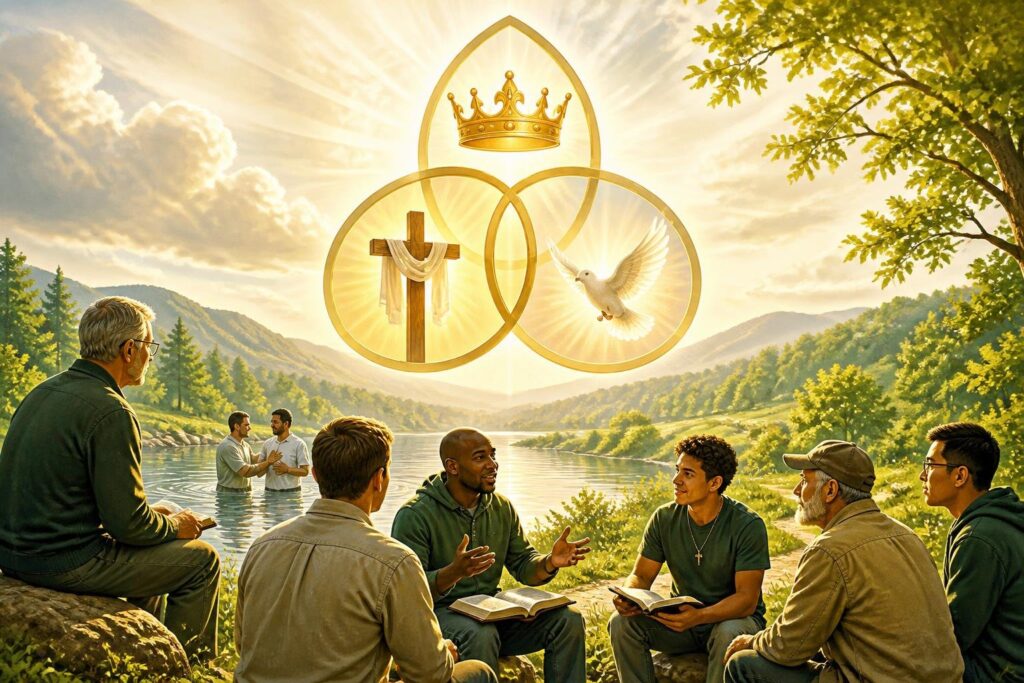
Have you ever wondered how God can be one and yet be Father, Son, and Holy Spirit all at once? The Bible teaches us that God is a perfect unity of three distinct persons who share the same divine nature equally. This triune nature of God is foundational to our understanding of who He is and how we relate to Him.
Understanding the Oneness of God in Deuteronomy
One of the clearest Old Testament affirmations of God’s unity is found in Deuteronomy 6:4, which declares, “Hear, O Israel: The Lord our God is one Lord.” This is not just a statement about God’s singularity but His unique and indivisible essence. God’s oneness is the starting point for all biblical teaching about Him.
In biblical context, this verse insisted Israel recognize Yahweh as their only true God, distinct from pagan gods who were many or fragmented. This oneness means God is whole and complete in Himself, not divided or multiplied in essence.
The Revelation of the Three-in-One in the New Testament
While the Old Testament highlights God’s oneness, the New Testament reveals how this one God exists in three persons. In Matthew 28:19, Jesus commands baptizing “in the name of the Father, and of the Son, and of the Holy Ghost.” Notice that the singular “name” is used for three distinct persons—Father, Son, and Holy Spirit—indicating they share equally in the one divine nature.
This verse is part of the Great Commission, emphasizing the unity and equality of the Godhead as the basis for Christian baptism and faith. The Father is God, the Son is God, and the Holy Spirit is God, yet there is only one God.
The Co-Equality and Fellowship of the Godhead
The apostle Paul in II Corinthians 13:14 offers a beautiful benediction: “The grace of the Lord Jesus Christ, and the love of God, and the communion of the Holy Ghost, be with you all.” Here, we see an expression of the grace, love, and fellowship shared among the three persons of the Godhead.
Each person fulfills a unique role but shares equally in divine attributes and glory. This verse highlights their eternal communion and cooperation in the work of salvation and in our daily relationship with God.
Practical Examples of the Triune Nature in Daily Life
- Prayer: We pray to the Father through the Son by the Holy Spirit, experiencing their distinct roles yet unified purpose.
- Baptism: Water baptism symbolizes dying and rising with Christ and is done in the one name of Father, Son, and Holy Spirit, illustrating the shared divine authority.
- Comfort and Guidance: The Holy Spirit indwells believers, representing God’s power and presence, while Jesus intercedes for us and the Father hears our prayers.
These examples show how the unity and equality within the Godhead affect our Christian walk, giving us confidence in God’s complete involvement in our lives.
Why the Unity and Equality of the Godhead Matters
Understanding the triune God prevents false teachings that diminish any person of the Godhead. Recognizing that Father, Son, and Holy Spirit are co-equal means the sacrifice of Jesus is truly the work of God Himself for our salvation, and that the Holy Spirit’s power is the power of God.
This truth strengthens our faith, assures us of perfect fellowship with God, and calls us to worship God as He has revealed Himself.
Key Takeaways
- The Bible teaches one God who exists eternally as three persons: Father, Son, and Holy Spirit.
- Each person is fully God, sharing equally in divine essence and glory.
- The triune nature is foundational to salvation, baptism, prayer, and Christian fellowship.
- This unity guards the truth of God’s nature and helps us trust Him fully.
- Through the triune God, we experience grace, love, and communion that transform our lives.
Closing Reflection
Heavenly Father, help us marvel at the mystery and majesty of Your triune nature. Thank You for revealing Yourself as Father, Son, and Holy Spirit, perfectly united and equal in glory. May we grow in faith and love, embracing the grace offered through Jesus Christ, empowered by Your Spirit. Keep us faithful to Your Word and humble as we worship You, one God in three persons, forever and ever. Amen.